Oil & Gas Field Monitoring
The Oil & Gas Field Monitoring pack gives upstream production teams real-time visibility across wellhead gateways, flow meters, pressure sensors, gas detectors, storage tank sensors, separator controllers, and pump controllers. Five detection rules cover high wellhead pressure, H2S and LEL gas hazards, low oil flow, rising water cut, and tank overfill protection.
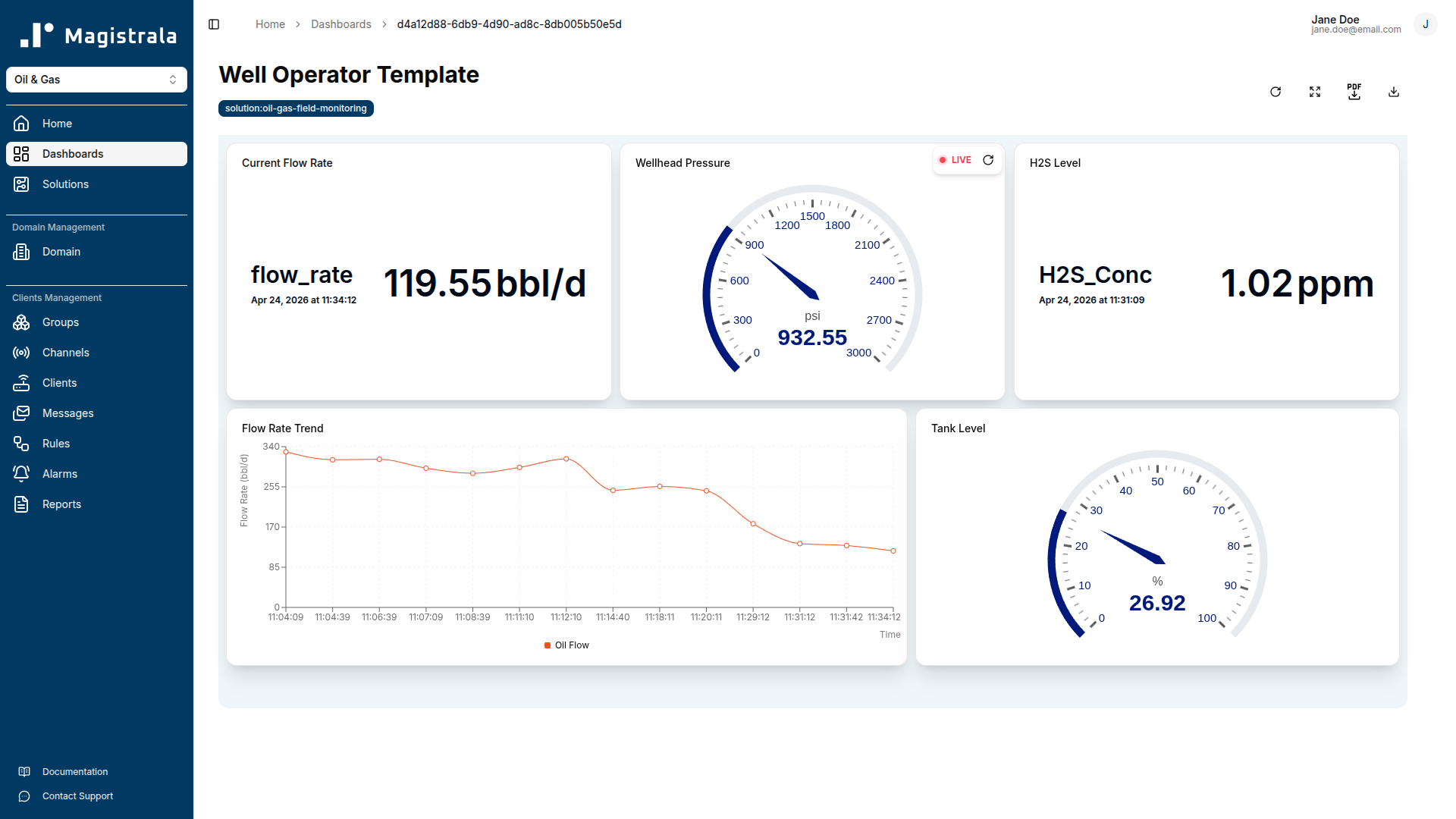
Field devices connect over MQTT with per-client credentials, so a compromised sensor does not expose the rest of the wellsite network. Raw telemetry and validated data flow through separate channels, keeping detection rules clear of corrupted sensor records. One Well Operator template scales to any number of wellheads without duplicating dashboard configuration.
See it in action
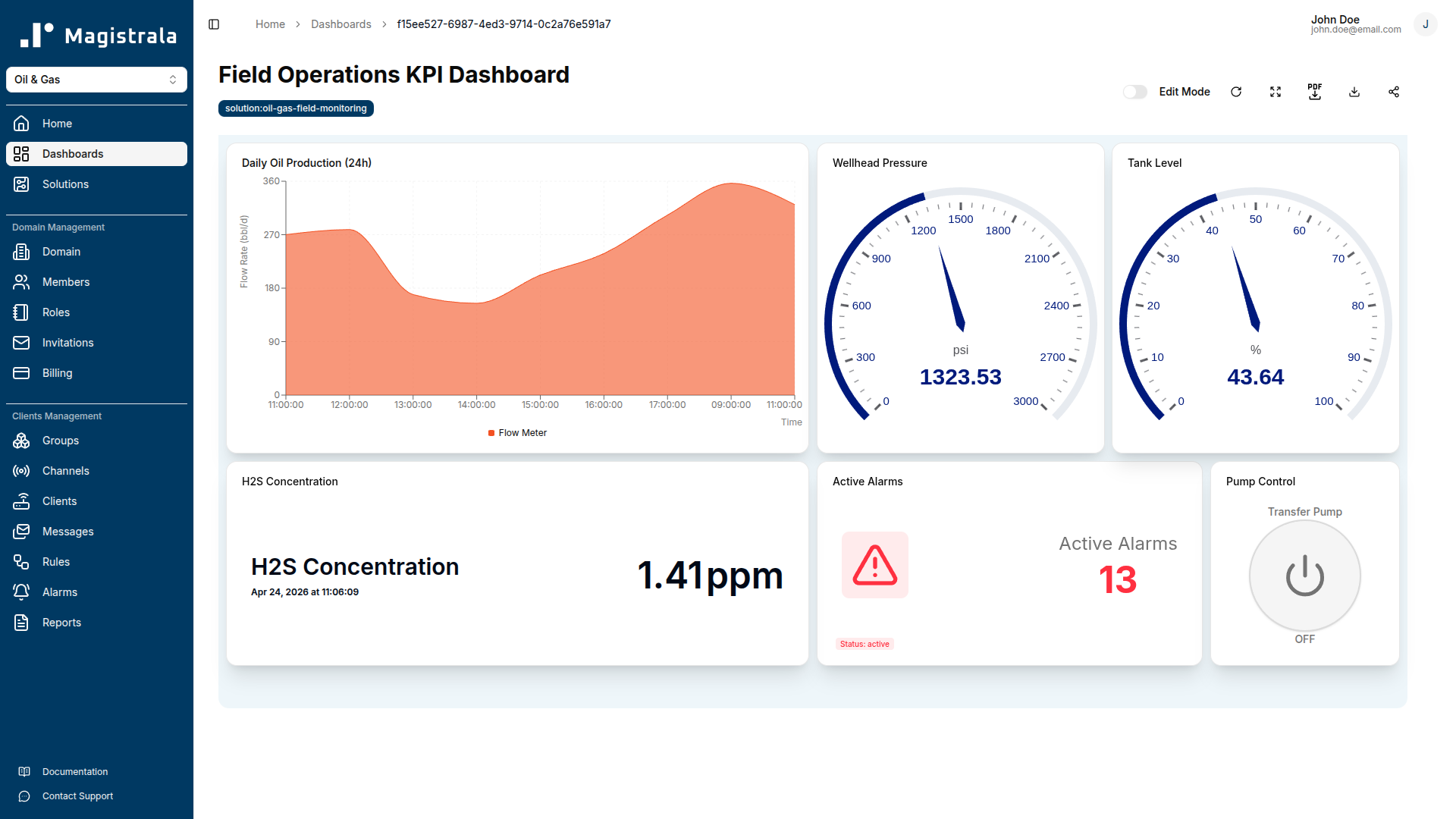
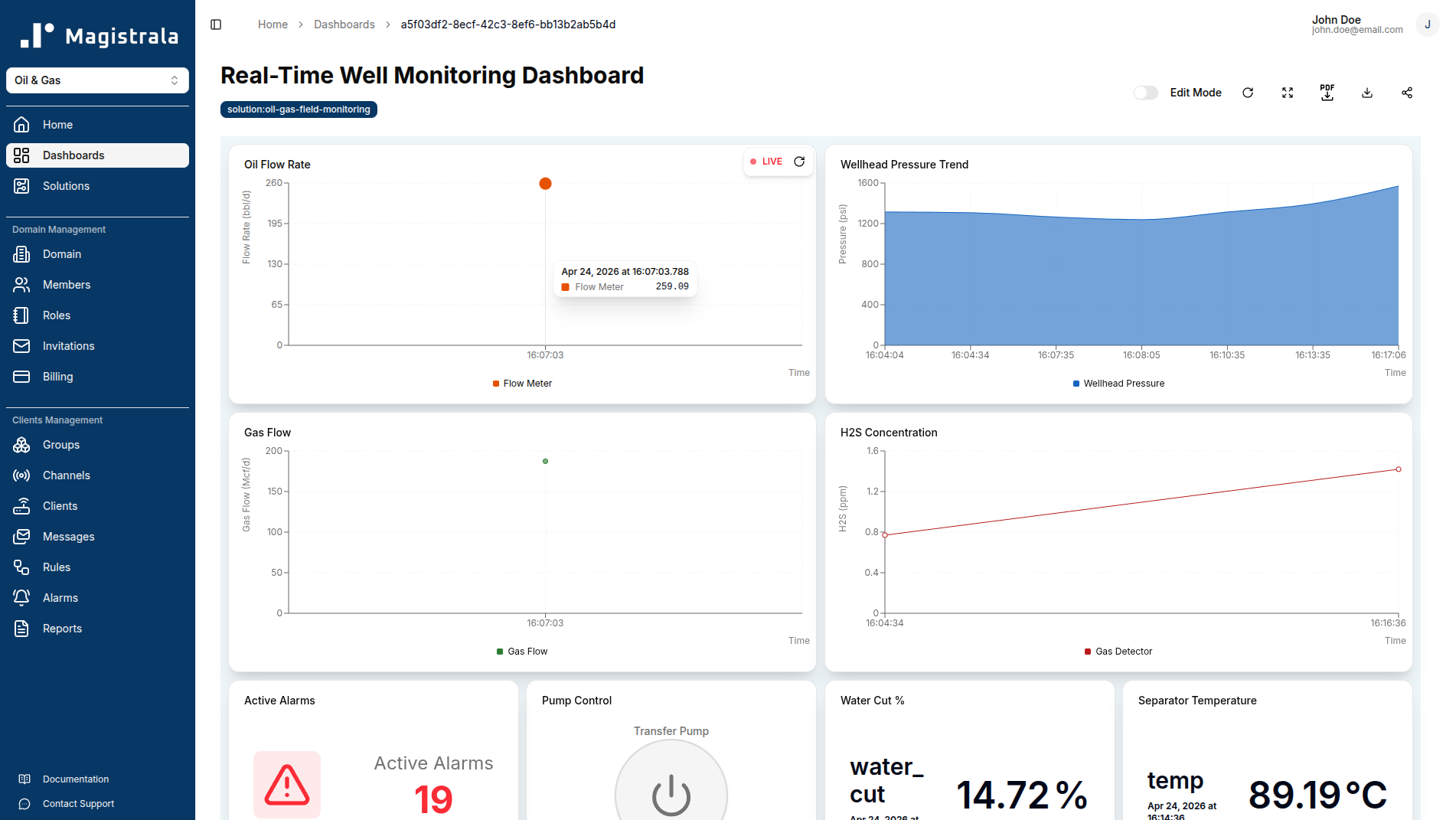
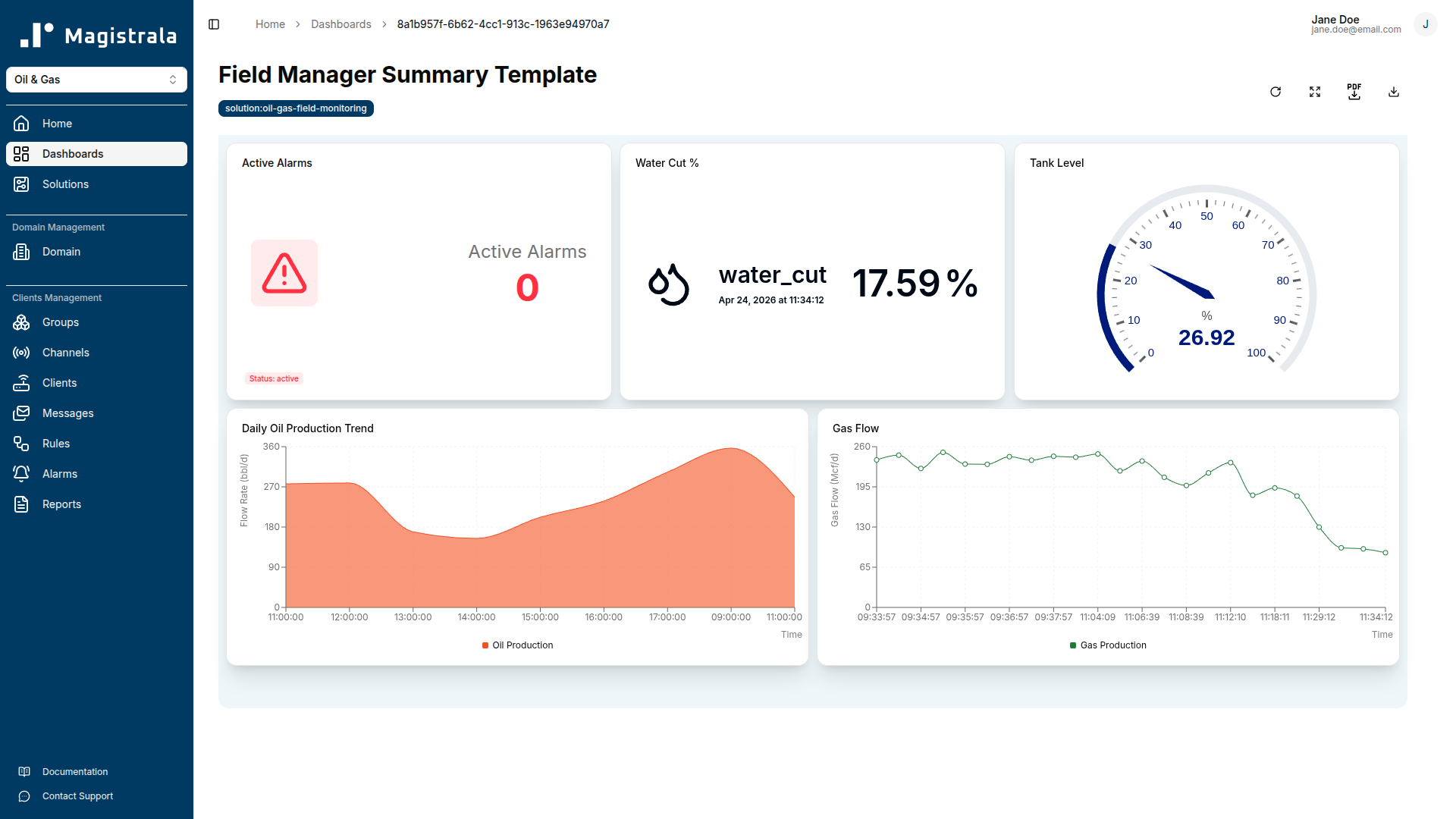
Purpose-built dashboards for every layer of your oil & gas field monitoring deployment.
Problems field operators deal with every shift
Wellhead incidents, gas hazards, and overfill events all have warning signals; the problem is having a system that catches them in time.
H2S above threshold at an unmanned wellsite
An electrochemical H2S detector hitting the OSHA ceiling at an unmanned wellsite is a hazardous event with nobody there to respond. The alarm needs to fire before the next scheduled site visit.
A tank filling while the transfer pump is stopped overnight
When the transfer pump trips at midnight and nobody notices, crude keeps flowing into the tank. By morning the level is at 90% and the spill risk window is closing.
Wellhead pressure trending toward MAOP between manual checks
Pressure excursions that develop between manual checks can reach critical levels before anyone looks at the gauge. Continuous monitoring catches the trend at 1800 psi before it reaches 2200.
From device to insight
Four steps from wellhead sensor to actionable alarm
Ingest
Wellhead sensors and controllers publish SenML payloads over MQTT to the Raw Telemetry Channel using per-device credentials. Every reading is saved immediately.
Validate
A data processing rule checks each incoming record against field safe ranges before alarm logic runs. Out-of-range sensor values are discarded before they reach detection rules.
Detect
Five rules watch clean data continuously. Pressure above 1800 psi fires a warning; above 2200 psi fires critical. H2S above 5 ppm triggers a gas hazard warning. Tank above 85% triggers an overfill warning.
Report
Daily production, weekly operations summary, and monthly compliance reports go out automatically by email. Long-term production records write to PostgreSQL for regulatory reporting.
Key Applications
Where upstream operators deploy the Oil & Gas Field Monitoring pack
Wellhead production monitoring
Flow rate, gas-oil ratio, and water cut tracked continuously across producing wells. Daily production reports close the loop without manual data collection.
H2S safety compliance at unmanned sites
Continuous OSHA-threshold monitoring at wellheads. Gas hazard alarms fire within seconds and reach on-call contacts by email.
Tank battery level management
Crude oil storage level monitored against two fill thresholds. Warning at 85% gives trucking schedulers a lead window before spill risk at 95%.
Separator and pump operations
Separator temperature and pressure trended for process upsets. Transfer pump status displayed and controllable from the KPI dashboard.
What you get out of the box
- H2S and LEL alarms fire within seconds of OSHA threshold breach, giving operators time to respond before exposure risk escalates
- Wellhead pressure warnings at 1800 psi give time to investigate before the 2200 psi critical limit is reached
- Tank overfill warnings at 85% give trucking schedulers a practical lead window before the 95% critical alarm
- Device Health Monitor flags any silent field device within 10–20 minutes, protecting both safety coverage and regulatory data completeness
- Monthly compliance reports generate and deliver automatically, replacing manual production accounting assembly
- Per-client MQTT credentials isolate each field device so a compromised sensor cannot access others on the wellsite
Common questions
How do we adjust pressure thresholds to match our well's MAOP?
Open the High Pressure Alert rule in the Rules page and edit the threshold constants. The defaults (1800 psi warning, 2200 psi critical) are typical Permian Basin parameters. Replace them with your well's specific MAOP specification.
Can the pack monitor multiple wells or field sites?
Yes. Each field site is a Magistrala domain with its own device clients, channels, and rules. The Well Operator and Field Manager Summary templates use tag-based device references, so deploying a new well means provisioning its clients and assigning a group.
How are H2S safety alarms escalated when no one acknowledges them?
The Gas Leak Detection rule sends email notifications to configured recipients the moment the alarm fires. For SMS or Safety Management System integration, use the rule's webhook output to POST the event to your external system.
Do all sensors need to connect through the Wellhead Gateway, or can they connect directly?
Either works. Each device type has its own client credentials, so sensors can connect directly if they have MQTT capability. In most field deployments, all sensors route through the Wellhead Gateway for a single TLS connection.
Ready to deploy Oil & Gas Field Monitoring?
Start free on Magistrala Cloud or contact us to scope a custom deployment for your organisation.