S1 – Linux Gateway for Industrial IoT.
S1 is a powerful Linux-based IoT gateway built on RISC-V architecture. It offers robust connectivity, advanced processing capabilities, and scalability for industrial IoT applications.
S0 Board
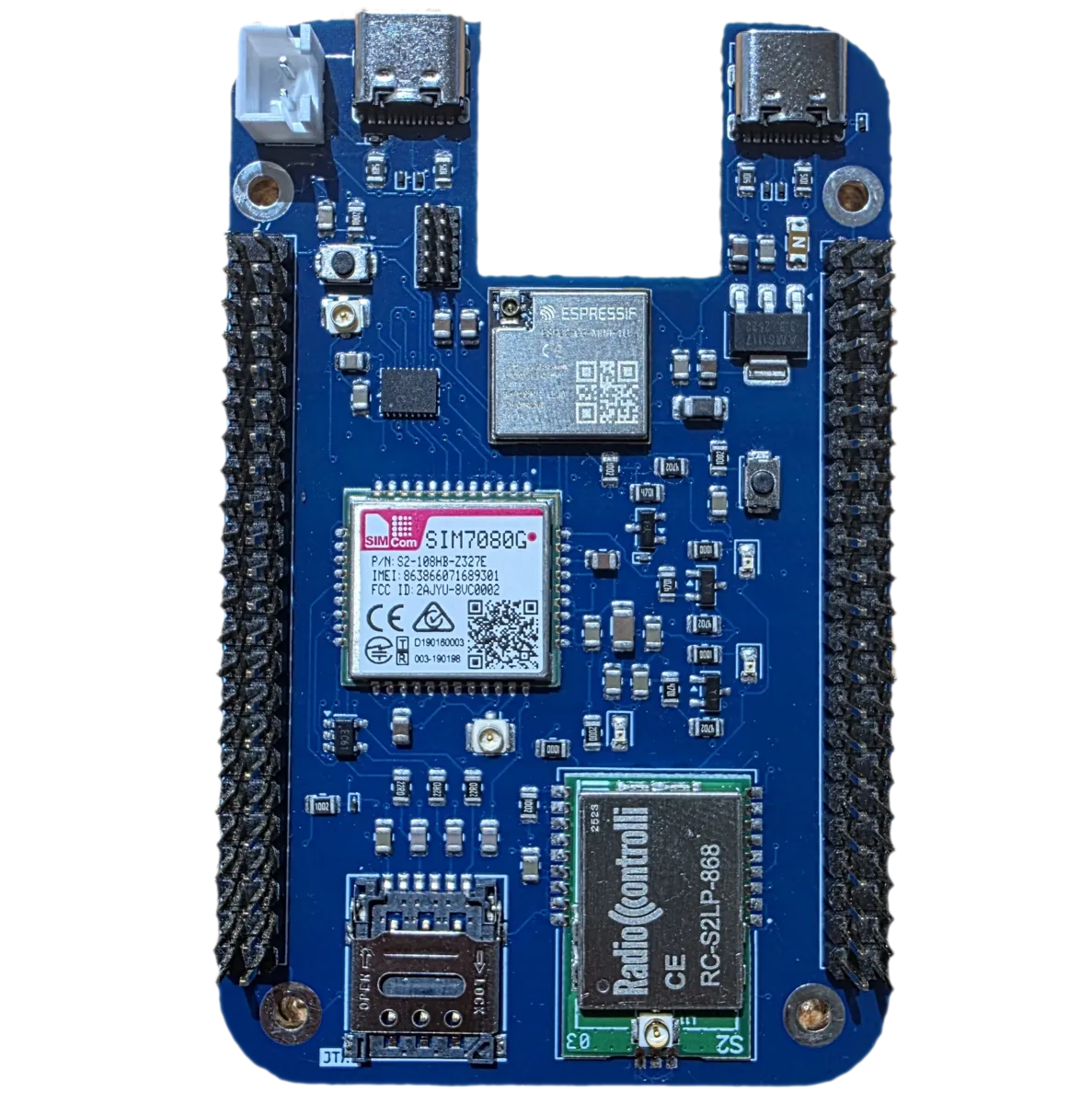
The S0 Board is the wireless connectivity core of the S1 gateway. It handles multi-protocol wireless data collection (Wireless M-Bus, NB-IoT, LTE-M, WiFi, and BLE) and passes data to the BeagleV-Fire for Linux-side processing and cloud backhaul.
- ✓ ESP32-C6 RISC-V Core
- ✓ Wireless M-Bus (868 MHz)
- ✓ NB-IoT / LTE-M (SIM7080G)
- ✓ WiFi & Bluetooth LE
- ✓ Zephyr RTOS
- ✓ Open Source Hardware
BeagleV-Fire
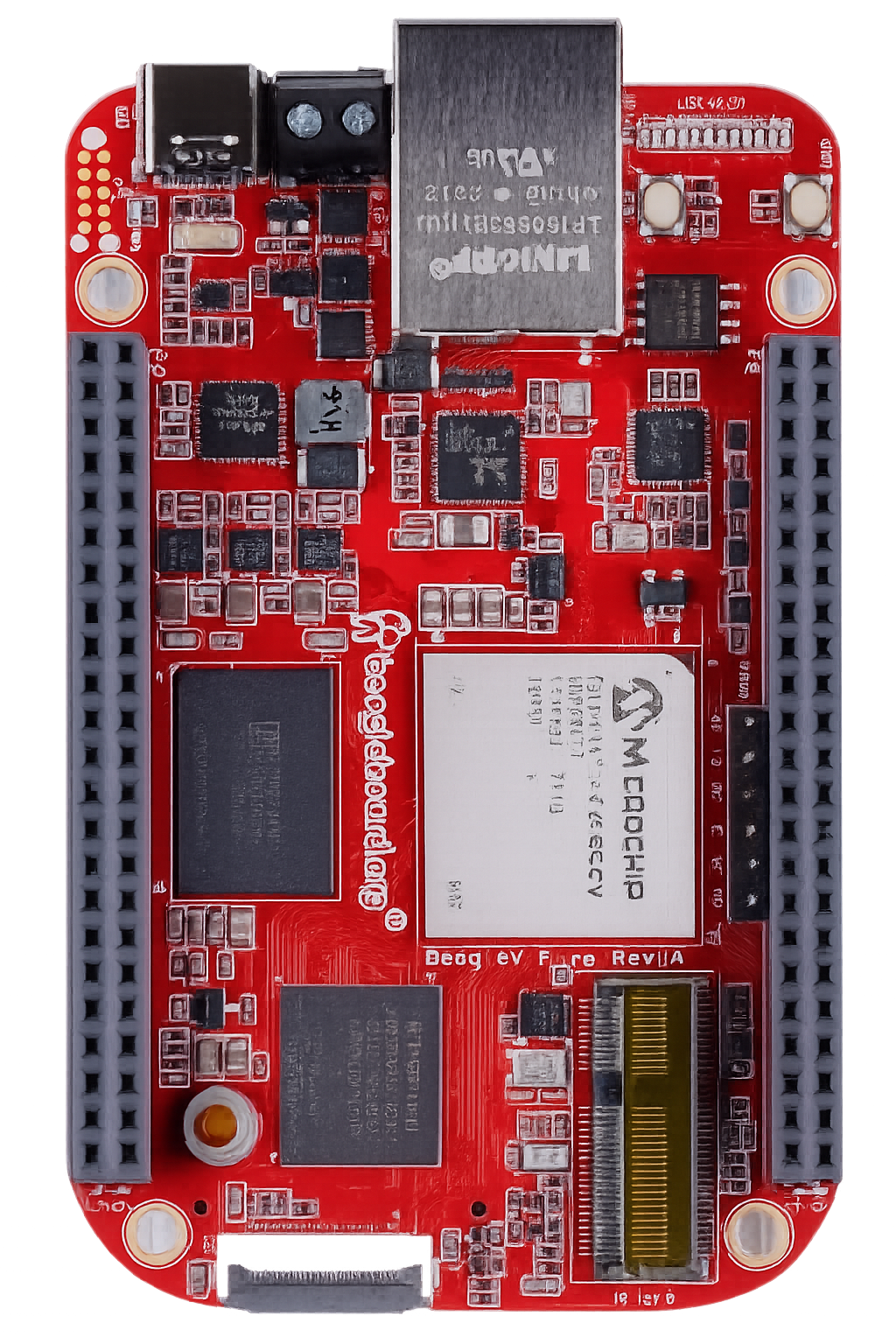
The BeagleV-Fire brings a full Linux operating system to the S1 gateway on a RISC-V PolarFire SoC. It provides the compute power needed for containerised workloads, edge AI inference, advanced networking, and seamless cloud integration; capabilities not available on a bare-metal RTOS.
- ✓ RISC-V Linux SoC (PolarFire)
- ✓ Full Linux Operating System
- ✓ High-Performance Edge Compute
- ✓ Advanced Networking Stack
- ✓ Container & Wasm Workloads
- ✓ Edge AI / ML Inference
S1 Features.
S0 Board + BeagleV-Fire: the Linux-based gateway for demanding industrial and edge computing deployments.
S1 combines the S0 module with the BeagleV-Fire board, pairing multi-protocol wireless capabilities with powerful Linux compute in a single gateway.
Runs a full Linux operating system, enabling richer software stacks, containerised workloads, and support for a wide range of open-source tools.
Built on RISC-V architecture, delivering high-performance computing for demanding industrial and edge AI applications.
Inherits the S0 module's multi-protocol connectivity (Wireless M-Bus, NB-IoT, LTE-M, WiFi, and BLE) for versatile IoT deployments.
Seamlessly integrates edge devices with cloud platforms via MQTT, CoAP, and WebSockets, powered by the Magistrala IoT platform.
Designed for demanding industrial environments requiring high-performance computing, robust connectivity, and long-term operational stability.
Where S1 deploys.
Smart Metering
Aggregate data from multiple S0 wireless gateways and forward it securely to Magistrala.
Industrial Automation
Run control logic and monitoring applications directly on the gateway in industrial environments.
Edge Computing
Process data locally with containers or Wasm before sending aggregated results to the cloud.
Edge AI Inference
Deploy and update ML models over the air using Propeller. Run inference at line speed.
Connects with the full stack.
S1 pairs with Magistrala for device management and Propeller for edge workload orchestration.
Common questions.
What is the difference between S0 and S1?
S0 runs Zephyr RTOS on an ESP32-C6 microcontroller, optimised for ultra-low power and constrained environments. S1 runs full Linux on a RISC-V compute board (BeagleV-Fire) and is suited to workloads requiring a full OS, containers, or higher processing power.
When should I choose Linux over Zephyr RTOS?
Choose S1 when you need standard tooling, container support, Python or higher-level runtimes, or when the workload requires more memory and compute than a microcontroller can provide. Choose S0 when power consumption and form factor are the primary constraints.
Does S1 support container workloads?
Yes. S1 runs a full Linux stack and can run Docker containers alongside WebAssembly workloads managed by Propeller. Both runtimes can coexist on the same device.
How does S1 connect to Magistrala?
S1 communicates with Magistrala over MQTT, CoAP, or HTTP. The S0 wireless radio module on S1 handles the communication with field devices, while the BeagleV-Fire compute board routes aggregated data to the cloud platform.
What is the BeagleV-Fire?
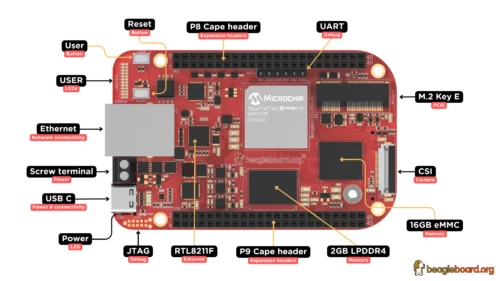
BeagleV-Fire is an open-hardware single-board computer based on the Microchip PolarFire SoC, which combines a RISC-V processor with an FPGA. It provides the Linux compute core for the S1 gateway.
Deploy Linux at the industrial edge.
Read the documentation, explore the open hardware, or talk to the team about your deployment requirements.
S1 hardware was developed with support from the European Union's Horizon Europe research and innovation programme as part of the ELASTIC project.